

The Origins of Astrology
To understand the origins of astrology is to understand one of the world’s oldest systems for understanding life on Earth. The earliest astrologers lived in ancient Mesopotamia, where they carefully observed the movements of the Sun, Moon, and planets. They noticed that the heavens moved in regular cycles and believed those cycles reflected the natural order of the world. They used the sky to understand the changing seasons, predict eclipses, and interpret events affecting kingdoms, agriculture, and society as a whole.
Everything changed during the Hellenistic period, when Babylonian astronomy, Egyptian timekeeping, and Greek philosophy remarkably came together in Alexandria, Egypt. This was where the birth chart, as we know it today, was developed. By calculating the exact zodiac sign (or constellation) rising on the eastern horizon at the moment of birth, astrologers could create a unique chart for each individual. Astrology expanded from describing nations and kings to exploring the experiences of one’s own life. Hellenistic astrologers believed the universe was ordered and they saw the heavens and the Earth as parts of the same living cosmos, governed by the same natural principles. The planets were therefore understood primarily as significators, revealing the unfolding pattern of fate rather than physically causing events. A helpful modern analogy is that of a clock. Just as the
hands of a clock do not create time but indicate it, the planets were believed to reveal the timing and character of life’s unfolding experiences.
This philosophy led to the development of predictive astrology. Hellenistic astrologers believed a natal chart contained the themes and possibilities of a person’s life, but that different parts of the chart became active at different times. They developed sophisticated timing techniques to determine when particular chapters of life, such as relationships, career, family, or periods of challenge and opportunity, were likely to unfold. Many of these techniques are still used by astrologers today.
Astrology continued to grow throughout the Greek and Roman worlds before flourishing during the Islamic Golden Age and the European Renaissance. For centuries it was studied alongside mathematics, philosophy, and medicine, and many of history’s greatest astronomers also practised astrology. However, during the Scientific Revolution, astronomy and astrology gradually separated as new scientific ideas transformed our understanding of the universe. Although astrology disappeared from universities, it continued to survive through dedicated practitioners and preserved texts.
In recent decades, many of the original Greek writings have been translated, leading to a revival of Hellenistic astrology. Ancient techniques forgotten for centuries are once again being studied and practised, allowing modern astrologers to reconnect with the tradition’s foundations. Today, astrology exists in many different forms, but they all share the same historical roots. Whatever your approach, astrology represents thousands of years of observation, reflection, and humanity’s enduring desire to understand our place within the greater order of the cosmos.
Read more about my approach to Astrology and the services I offer
Sources and Influences
Hellenistic Astrology: The Study of Fate and Fortune – Chris Brennan
Ancient Astrology in Theory and Practice – Demetra George
Similar Resources
12th October 2026
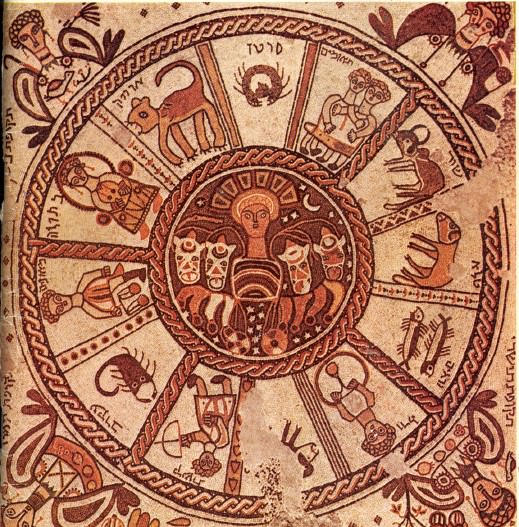
Why the Zodiac Signs Mean What They Mean
Why do zodiac signs mean what they mean? Long before modern horoscopes, the zodiac was initially used as a calendar, and the meanings given to each sign (or constellation) result from centuries of watching the…
10th October 2026
Reiki and the Body’s Stress Response
Reiki is often described as an energy-based practice, but what actually happens to the body during a session? For someone unfamiliar with Reiki, the experience can seem difficult to explain. A practitioner places their hands…
30th September 2026
How the Moon Helps Us See Life Differently
For thousands of years, human beings looked to the Moon to understand time, seasons, change, and the rhythms of life. Before the introduction of modern calendars and clocks, the Moon was a visible and reliable…