
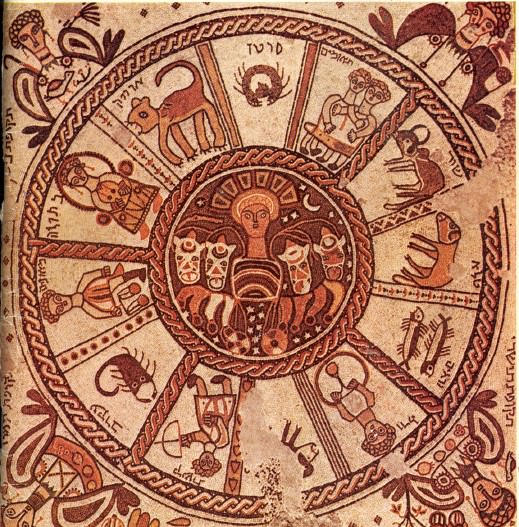
Why the Zodiac Signs Mean What They Mean
Why do zodiac signs mean what they mean? Long before modern horoscopes, the zodiac was initially used as a calendar, and the meanings given to each sign (or constellation) result from centuries of watching the sky and following the seasons. Babylonian astronomers tracked celestial objects because their lives depended on it, they needed to know when to plant and harvest, when rivers would flood and tides would turn, and when it was safe to travel. Around the fifth century BCE the Sun’s yearly path was split into twelve equal slices t0 reflect the twelve lunar cycles in each solar year. Later, after the conquests of Alexander the Great, scholars from Greek, Egyptian, and Mesopotamian traditions pooled their knowledge and built on that foundation.
Seasonal Cycles and Astrology Modalities
In Western astrology, the zodiac signs are tied to the seasons, with Aries beginning at the spring equinox, Cancer marking the start of summer, Libra ushering in autumn, and Capricorn beginning winter. This also explains the three modalities and how each sign engages with change. Cardinal signs (Aries, Cancer, Libra, and Capricorn) begin the seasons, they bring movement and initiate action. Fixed signs (Taurus, Leo, Scorpio, and Aquarius) occupy the middle of each season when conditions have settled, and are associated with stability, persistence, and endurance. Mutable signs (Gemini, Virgo, Sagittarius, and Pisces) mark the end of each season, they are said to adapt to changing conditions as one season gives way to the next.
Symbols and Elements
Ancient astrologers then assigned symbols to reflect qualities associated with these points in the seasonal cycle. Aries for example, represented by a ram who initiates without hesitation, while Taurus takes the form of a patient yet stubborn bull. Libra’s scales, the only inanimate object in the zodiac, reflect themes of balance and judgement. Each sign’s character emerges from the combination of its modality and element. As a cardinal fire sign, Aries initiates through boldness and direct action, while Cancer is also a cardinal sign, as a water sign, it initiates through care and emotional connection. The modality describes how a sign acts, while the element describes the nature of its energy. Read more about the four elements in astrology.
Thema Mundi and Planetary Rulers
The final layer is the planetary ruler of the sign, which comes from a combination of geometry and a teaching diagram called the Thema Mundi. The Moon and Sun were given rulership of Cancer and Leo, the brightest and warmest stretch of the northern year, the other planets were placed outward from there according to their distance from Earth. Mercury took Gemini and Virgo, Venus took Taurus and Libra, Mars took Aries and Scorpio, Jupiter took Sagittarius and Pisces, and slow and distant Saturn took the coldest and darkest signs, Capricorn and Aquarius. This arrangement allowed planes to lend their own character to the signs. In the case of Aries, the ram gives courage, early spring brings beginnings, fire gives energy, the cardinal rhythm gives initiative, and Mars gives drive.
Modern Expressions of the Zodiac
Modern psychological and evolutionary astrology takes a softer approach where signs have higher and lower expressions, for example, Gemini can bring curiosity and an open mind or scattered distraction. Cancer has the ability to feel deeply and nurture others, but can self sabotage by hiding in a shell or smothering people, while Libra brings balance and harmony, but risks abandoning their own needs to keep the peace. Regardless of one’s views of astrology, its symbolism makes more sense when understood as a language built around the cycles of nature, human experience, and the changing seasons of life.
Sources & Influences
This article has been informed by the work, research, and teachings of the following astrologers and authors. I recommend exploring their work for further reading and learning.
Similar Resources
10th October 2026
Reiki and the Body’s Stress Response
Reiki is often described as an energy-based practice, but what actually happens to the body during a session? For someone unfamiliar with Reiki, the experience can seem difficult to explain. A practitioner places their hands…
30th September 2026
How the Moon Helps Us See Life Differently
For thousands of years, human beings looked to the Moon to understand time, seasons, change, and the rhythms of life. Before the introduction of modern calendars and clocks, the Moon was a visible and reliable…

28th September 2026
The Origins of Astrology
To understand the origins of astrology is to understand one of the world’s oldest systems for understanding life on Earth. The earliest astrologers lived in ancient Mesopotamia, where they carefully observed the movements of the…